|
|
 Re: رئيس الاركان السابق لجيش الاسترالى: الحرب قادمة??? (Re: Zakaria Joseph) Re: رئيس الاركان السابق لجيش الاسترالى: الحرب قادمة??? (Re: Zakaria Joseph)
|
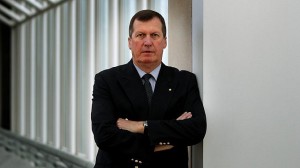
AUSTRALIA needs to prepare for an increasingly savage, 100-year war against radical Islam that will be fought on home soil as well as foreign lands, the former head of the army, Peter Leahy, has warned.
Professor Leahy, a leading defence and strategic analyst, told The Weekend Australian the country was ill-prepared for the high cost of fighting a war that would be paid in “blood and treasure” and would require pre-emptive as well as reactive action.
“Australia is involved in the early stages of a war which is likely to last for the rest of the century,” he said. “We must be ready to protect ourselves and, where necessary, act pre-emptively to neutralise the evident threat. Get ready for a long war.”
Senior intelligence officials have moved to shore up public support for the Abbott government’s tough new security laws, including enhanced data-retention capabilities enabling agencies to track suspect computer usage.
Australian Security Intelligence Organisation director-general David Irvine said the proposed data laws, which require phone and internet companies to retain records for two years, were “absolutely crucial” to counter the jihadist terror threat.
The government’s security package also includes a $630 million funding boost to intelligence agencies and police to help prevent domestic terrorist attacks.
Professor Leahy — a former lieutenant general who ran the army for six years, from 2002-2008 — said the threat of radical Islam would require action on several fronts, including a strengthening of controls against biological, chemical and nuclear attacks.
It would also include greater protection for critical infrastructure and iconic targets against attack.
The Western withdrawal from Afghanistan did not constitute the end of the so-called war on terror, “nor, as was claimed by prime minister Julia Gillard, in January 2013, a transition from the 9/11 decade”, he said.
Michael Krause, a former senior Australian Army officer responsible for planning the coalition campaign in Afghanistan, said he agreed “absolutely” with Professor Leahy. “I have seen these people,” the retired major general said.
“I know how they think. I know how they fight. There is no compromise possible.
“These long wars require long commitment to outlast radical ideas and provide viable, meaningful alternatives which require a whole-of-government response, rather than assuming the military can or should do it all.’’
Professor Leahy said politicians needed to “develop an honest and frank dialogue” with the Australian public.
“They should advance a narrative that explains that radical Islamism and the terrorism it breeds at home and abroad will remain a significant threat for the long term, it will require considerable effort, the expenditure of blood and treasure and it will, of necessity, restrict our rights and liberties,” he said.
Professor Leahy is the director of Canberra University’s National Security Institute and part of the Abbott government’s team carrying out a comprehensive review of Defence.
He said radical Islamists intent on a new world order were already a threat to the survival of nations in the Middle East and Africa.
If the declared caliphate in Syria and Iraq survived, bases would be established there for attacks on the West and that would embolden “home grown” radicals to attempt attacks in Australia. Military action would be needed to eliminate the threat.
Radicals saw the West as “the far enemy” and they were undoubtedly planning more attacks in Australia. Senior intelligence believes the view that the threat posed by radical Islam would pass was “optimistic”.
Mr Irvine, who took the unusual step of speaking to the media yesterday, said the current terrorism threat level of “medium” meant that a terrorism “event” in Australia was likely.
“Where our volume of work has increased is that this event could occur in a dozen different places now, whereas before it was in a small, refined area,” he said.
Professor Leahy said that when Australia did choose to be involved its aims must be measured and realistic, with nations under the greatest threat from radical Islamists supported while care was taken not to inflame local tensions.
The solution had to come from within the Muslim world, which so far seemed disinclined or unable to imagine a path to peace.
Professor Leahy said the threat was likely to worsen as radicals returned from overseas and the internet dumped Islamist propaganda into Australian
living rooms.
Some efforts at deradicalisation had begun but a much greater effort must be made to engage Muslim clerics and Islamic thought leaders to debunk radical ideologies being offered to young Australians.
http://www.theaustralian.com.au/national-affairs/defence/wel...9283052c28d6579f669#
| |
 
|
|
|
|


 Zakaria Joseph

 فيس بوك
 تويتر
تويتر
 انستقرام
 يوتيوب
 بنتيريست