Welcome Guest [Login]
Your last visit: 11-02-2026, 01:58 AM Home
|
|
 

  
|
 Articles and ViewsWho Is Bankrolling TASIS؟ Hemedti, Money and the Making of a Parallel State By Dr. El-Tahir El-Fak |
|
Who Is Bankrolling TASIS؟ Hemedti, Money and the Making of a Parallel State By Dr. El-Tahir El-Fak
| 10-11-2026, 12:14 PM |
د.الطاهر الفكى
 د.الطاهر الفكى
Registered: 10-24-2017
Total Posts: 28
|
|
 Who Is Bankrolling TASIS؟ Hemedti, Money and the Making of a Parallel State By Dr. El-Tahir El-Fak |
01:14 PM October, 11 2026 Sudanese Online
د.الطاهر الفكى-UK
My Library
Short URL
Who Is Bankrolling TASIS؟ Hemedti, Money and the Making of a Parallel State
By Dr. El-Tahir El-Faki
The emergence of the Transitional Authority for the Sudanese State (TASIS) raises a question that goes beyond its political legitimacy: who is financing the parallel state being constructed in areas controlled by Mohamed Hamdan Dagalo, “Hemedti,” and the Rapid Support Forces (RSF)؟
It would be tempting to describe TASIS simply as a government bankrolled personally by Hemedti. The reality is more complex. The evidence points instead to the gradual conversion of an economic and military network associated with Hemedti and the Dagalo family into the financial and administrative foundations of a parallel political authority.
Before the war began in April 2023, the RSF had already developed substantial economic resources. Businesses associated with the Dagalo family, particularly those involved in gold and other commercial activities, provided the organisation with an economic base relatively independent of the Sudanese state. International investigations have documented the importance of gold to the RSF’s financial networks, while sanctions imposed on Hemedti-linked companies have highlighted their role in sustaining the organisation.
The war dramatically increased the importance of this economic infrastructure. Control of territory in Darfur and other areas gives the RSF access not only to natural resources but also to taxation, customs, trade and other forms of territorial revenue. Gold can be particularly valuable because it can be converted into hard currency and moved through international commercial networks.
This creates an important distinction. There is substantial evidence of Hemedti-linked wealth and RSF financial networks, but less publicly established evidence that Hemedti personally transfers money into a TASIS treasury. It would therefore be misleading to portray the relationship simply as one man writing cheques to a government.
A more revealing interpretation is that TASIS represents an attempt to institutionalise the economic power accumulated by Hemedti and the RSF.
The development of parallel financial institutions is particularly significant. Efforts to establish banking arrangements, a monetary system and a parallel central-bank structure suggest that TASIS is attempting to move beyond the administration of territory towards the construction of the economic machinery of a state. The circulation of new Sudanese currency in RSF-controlled areas and the emergence of parallel financial-transfer mechanisms further demonstrate this ambition.
The sequence is therefore striking:
family-linked wealth → commercial networks → military power → territorial control → taxation and resource extraction → parallel financial institutions → political authority.
This is the economic dimension of what might be described as the Dagalo proto-dynastic project.
The objective is not necessarily to reproduce a conventional nation-state immediately. Rather, it is to transform accumulated personal, family and military power into institutions capable of sustaining political authority beyond the battlefield.
Yet this strategy contains a fundamental vulnerability. A state cannot depend indefinitely on the wealth of one family, one military organisation or one resource. For TASIS to become a durable political entity, it would need predictable revenues, functioning institutions, economic legitimacy and financial autonomy.
The central question, therefore, is not simply whether Hemedti is bankrolling TASIS. It is whether Hemedti and the RSF can successfully transform their existing economic power into an autonomous state economy.
That may ultimately determine whether TASIS becomes a durable alternative centre of power—or remains an extension of the military-commercial system from which it emerged.
|
|
   
|

|

|

|
|
|
|
|
|
|
Re: Who Is Bankrolling TASIS؟ Hemedti, Money and the Making of a Parallel State (Re: د.الطاهر الفكى)
|
I read Dr. El-Tahir El-Faki’s article with dismay. As someone who spent months working without pay alongside approximately thirty to forty Sudanese participants from across the country, gathering in hotels and apartments in Nairobi to help draft a charter and a constitution, I find his portrayal of TASIS deeply troubling.
Dr. El-Faki does acknowledge that evidence of RSF financial networks is not the same as evidence that Hemedti personally finances a TASIS treasury. Yet he proceeds to interpret TASIS primarily as an institutional expression of the Dagalo family’s economic and military power. Where, in this account, are the political aspirations, deliberations and contributions of those of us who participated in drafting its founding documents؟
Our unpaid participation does not, by itself, settle questions about the financing of the wider project. Those questions deserve scrutiny. But an examination of financing should distinguish documented financial relationships from interpretations of political purpose. It should also engage seriously with the charter and constitution, rather than treating the project’s political character as already established by its association with the RSF.
I can speak directly to my own contribution: I gave my time and effort without pay to work towards a constitutional vision for Sudan. Readers may disagree with that vision or question whether TASIS can fulfil it. Such criticism should address what we proposed and where it falls short.
To me, the article reflects a recurring weakness in Sudanese political debate: reducing complex political initiatives to the ambitions of powerful individuals while overlooking the agency of other participants. After roughly seventy years of independence, we still struggle to find an inclusive approach to building a united Sudan. We will not move closer to that goal through accounts that leave so much of the political story untold.
Sudan needs rigorous scrutiny, honest disagreement and serious engagement with competing constitutional visions. Without these, we risk perpetuating the divisions that leave our people waiting for the next war.
| |
|
|
|
|
|
|
|
|
Comments of SudaneseOnline.com readers on that topic:
Who Is Bankrolling TASIS؟ Hemedti, Money and the Making of a Parallel State By Dr. El-Tahir El-Fak
at FaceBook
Report any abusive and or inappropriate material
| |
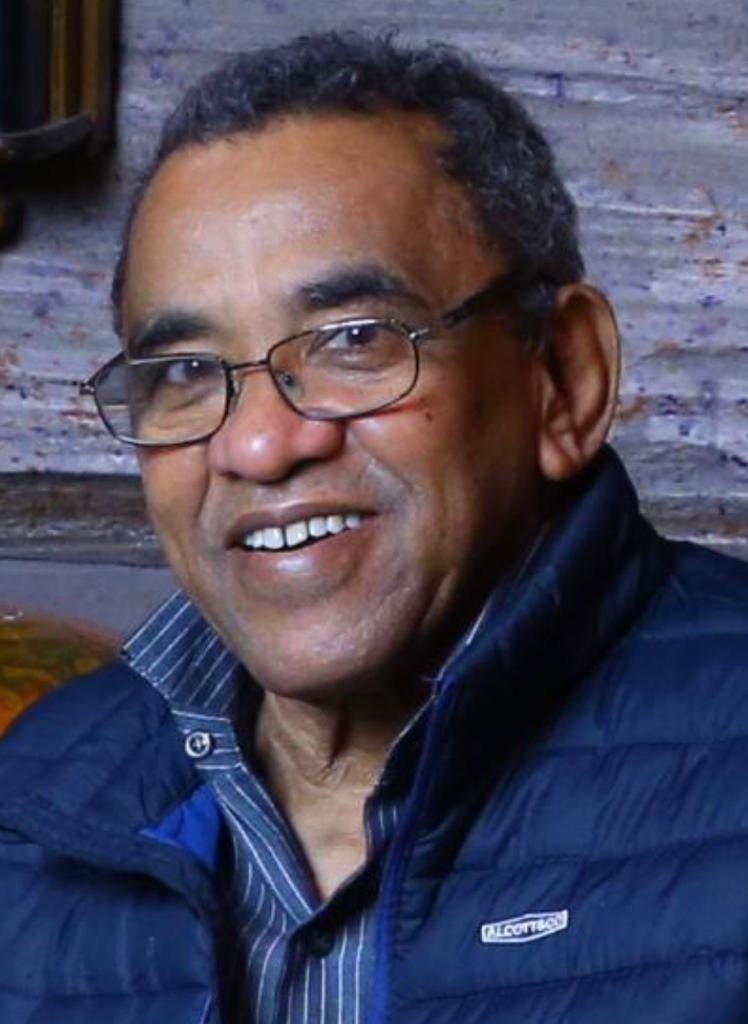 Ahmed Eltigani Sidahmed

 فيس بوك
 جوجل بلس
 تويتر
 انستقرام
 يوتيوب
 بنتيريست