| 10-29-2026, 11:22 AM |
مجتبى سعيد عرمان
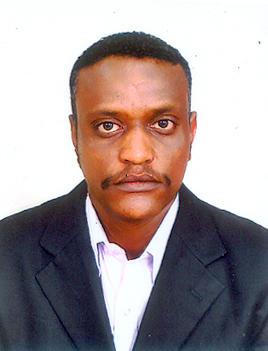 مجتبى سعيد عرمان
Registered: 10-26-2013
Total Posts: 31
|
|
 Saint Claire: All Religions Lead to God Dr. Mujtaba S. Arman |
11:22 AM October, 29 2026 Sudanese Online
مجتبى سعيد عرمان -السودان
My Library
Short URL
Saint Claire: All Religions Lead to God
Dr. Mujtaba S. Arman
This article is primarily devoted to the precept of transcending values of religious practices incarnated in soul of the greatest Saint Clare whose traces are ineffaceable, its legacy still celebrated by lots of people particularly in Europe. The suggestion of this article, so to speak, came as a result of an academic mission to Italy recently to Perugia University which was established in 1308. The whole mission was entirely dedicated to engaging with our counterparts in the world of academia, but we were being invited to visit Assisi where the body of Saint Clare lies.
On a morning filled with the delightful breezes of Perugia-bathed in a silvery, early-day light-we boarded a bus that carried us to the bewitching city of Assisi, located some twenty kilometres away from Perugia city. The city welcomed us with open arms, much like a mother embracing her infant, or a bride stretching her neck toward the heavens to greet her knight, who arrives mounted upon a white steed.
On the top of the hill, The Basilica of Saint Clare of Assisi opens its arms to receive visitors from different places of the world irrespective of their cultural, social, and religious backgrounds. We took a tour around the shops which scattered nearby the church. The presence of the people in the church reminded me of the Great Imam Ali shrine, the foremost advocate for combating poverty, who famously declared: "If poverty were a man, I would kill him.", in Alnajf in Araq.
We waited till our tour guide, Sarah, who took us in a voyage inside the church. I was captivated by the story of Saint Clare, who left behind the life of luxury she enjoyed by the virtue of her aristocratic background. Sarah, our tour guide, explained to us that Saint Clare had her hair cut by Saint Francis of Assisi as a sign of her renunciation of the mundane world and dedication to God. If my memory serves me well, I asked our tour guide immediately about Saint Clare's giving up of her aristocratic nobility in return of altruistic life. She, our tour guide, explained to us that Saint Clare left her family home clandestinely and travelled to the Chapel of the Porziuncola, not far away from Assisi, where Saint Francis of Assisi cut off her long hair, replaced her fabulous gown with a coarse habit and veil, and consecrated her to a life of radical poverty.
Saint Clare's abandonment of the materialistic world reminded me of the great Islamic Sufi who left a rich legacy of Sufism on the minds and hearts of their followers and the humanity worldwide. My memory is cramped with the life story of my master, al-Hallaj-a man who left this world to those who crave it. How could it be otherwise, when he himself declared: "The world tries to beguile me, as if I were unaware of its true nature; God has forbidden what is unlawful within it, and I have abandoned even what is lawful. It extended its right hand toward me, speaking about life indulgences such as power, wealth, economic privileges, and women, and I pushed it away-and the same with its left."
Saint Clare's and the devotion of her life for sake of spiritual world reminded me of the great Sufi ever, Ibn Arabi whose book named the Meccan Revelations or in Arabic 'Al-Futuhat al-Makkiyya, which evoked an infinite controversy up to the present day. The guru, Ibn Arabi, articulated his intricate notions in Meccan Revelations that surpassed the traditional orthodoxy of Islamic traditions and teachings. His spiritual voyage of Sufism has had artistic values and went beyond the literal meanings of the language into ideas of the present-day cosmic values such as acceptance of the 'other' and the 'otherness'. Let us contemplate on these verses that are deemed to be the most tolerant verses ever uttered by a human being.
My heart has become capable of every form:
Even if my faith is not aligned with theirs,
My heart has become capable of every form,
A pasture for gazelles, a monastery for monks,
A temple for idols, a Kaaba for those who circumambulate,
The wooden slates of the Torah, and the pages of the Quran.
I follow the religion of Love, wherever its mounts may turn;
For Love is my religion and my faith
Ibn Arabi was born in Murcia, in Andalusia, in the year 506 Hijri calendar -a turbulent historical epoch marked by the fall of Andalusia and the Mongol invasions. Yet, he did not seek refuge in Sufism as a form of escapism; rather, he sought to interpret the existence itself. In his renowned book Meccan Revelations (al-Futūḥāt al-Makkiyya), in which he transcended literalist perspectives to uncover profound, underlying meanings-establishing himself as a thinker who was, in a sense, millions of light-years ahead of his time.
Ibn Arabi advocated a profound philosophical vision based on the multipularism of the existence unlike the traditional Sufi, he refused binary opposites and absolutism. He believed that the difference is not as incidental, but as fundamental. identity is not fixed; rather, it is fluid and open to the other.
He does not view pluralism as the final destination; rather, he links it to an original unity that manifests in a variety of forms. In his view, pluralism is not the antithesis of unity, but one of its manifestations. Furthermore, drawing upon the spirituality of Sufism, he contends that history should not be reduced to mere materialistic conflicts, as in Marxist ideology, or structural shifts-nor, as in the case of instrumental rationality, to mere figures and statistics. Instead, there exists a transcendent spirituality that animates history, revealing itself through a multitude of forms.
Seemingly, a textual analyst may feel that there is an apparent discrepancy in Ibn Arabi's texts, but the fact is that it is merely a reflection of the depth of his spiritual experience, transcending preconceived notions and ready-made categorizations. "Manifestation" (tajalli) signifies the emergence of the truth in various and diverse forms, corresponding to the plurality and layered nature of reality. Ibn Arabi thus established a new ethic rooted in a shared interconnectedness-both toward others and toward the natural world.
In the same vein, let's contemplate on these verses of the great al-Halaj on the spiritual state that embodies the Sufi at the moment of manifestation, he said: “You are you, and he is he; so, beware of saying, as a lover might: "I love the one I love, and the one I love is me." These verses uttered by him divulge the state of self-annihilation “Fana “within divine love. In Sufism, when a seeker reaches the ultimate degree of love for God, he perceives his own will as having been dissolved into the will of God, such that he's no longer sees himself as having an independent existence.
All in all, the sacred text must not be exploited for mundane interest, but it ought to be utilized as a source and energy for building and liberation-not a matter of dry rituals and rigid texts. Rather it should serve to uphold human dignity and freeing humanity from wants, fear, and poverty. After all, did Christ not say that one can not serve both God and money at the same time.
Rest in peace, the great Saint Clare because you chose to serve God and you have left an indelible mark on the tired soul of human beings.
|
|
    
|

|

|

|
|
|




 فيس بوك
 جوجل بلس
 تويتر
 انستقرام
 يوتيوب
 بنتيريست